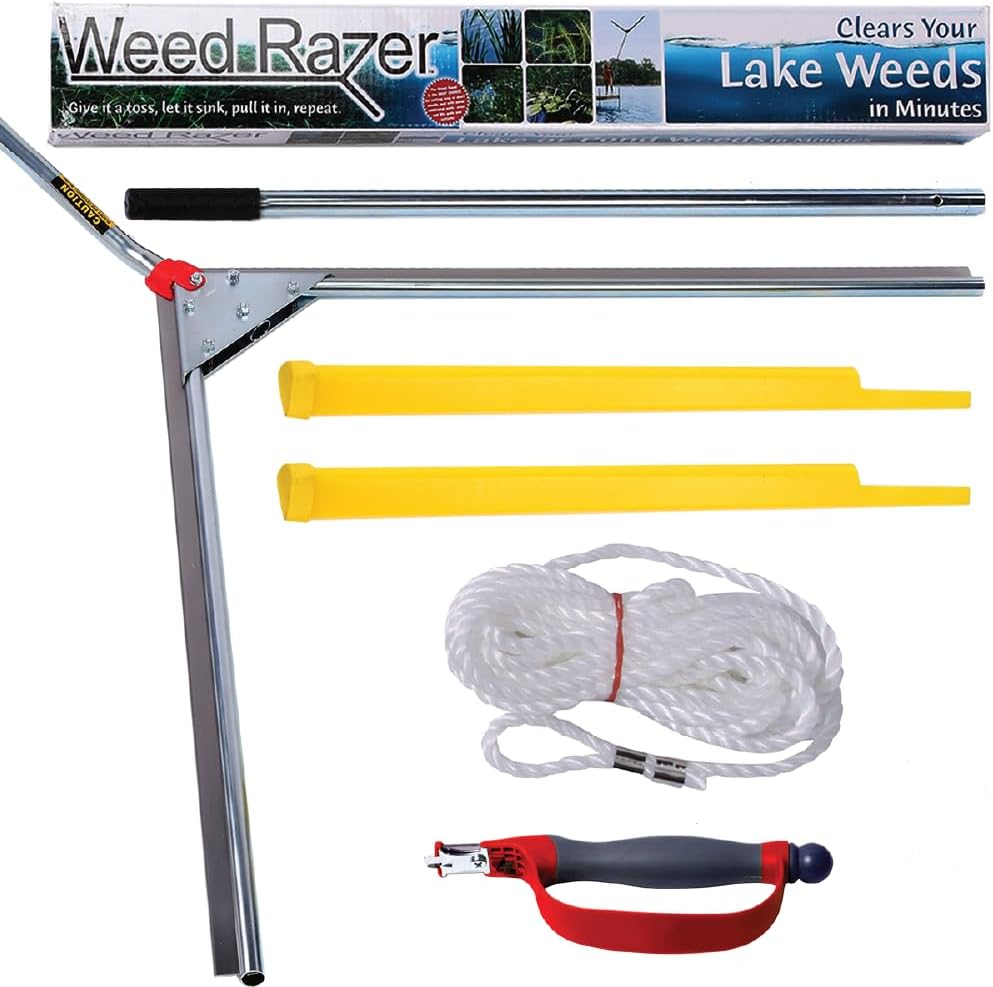
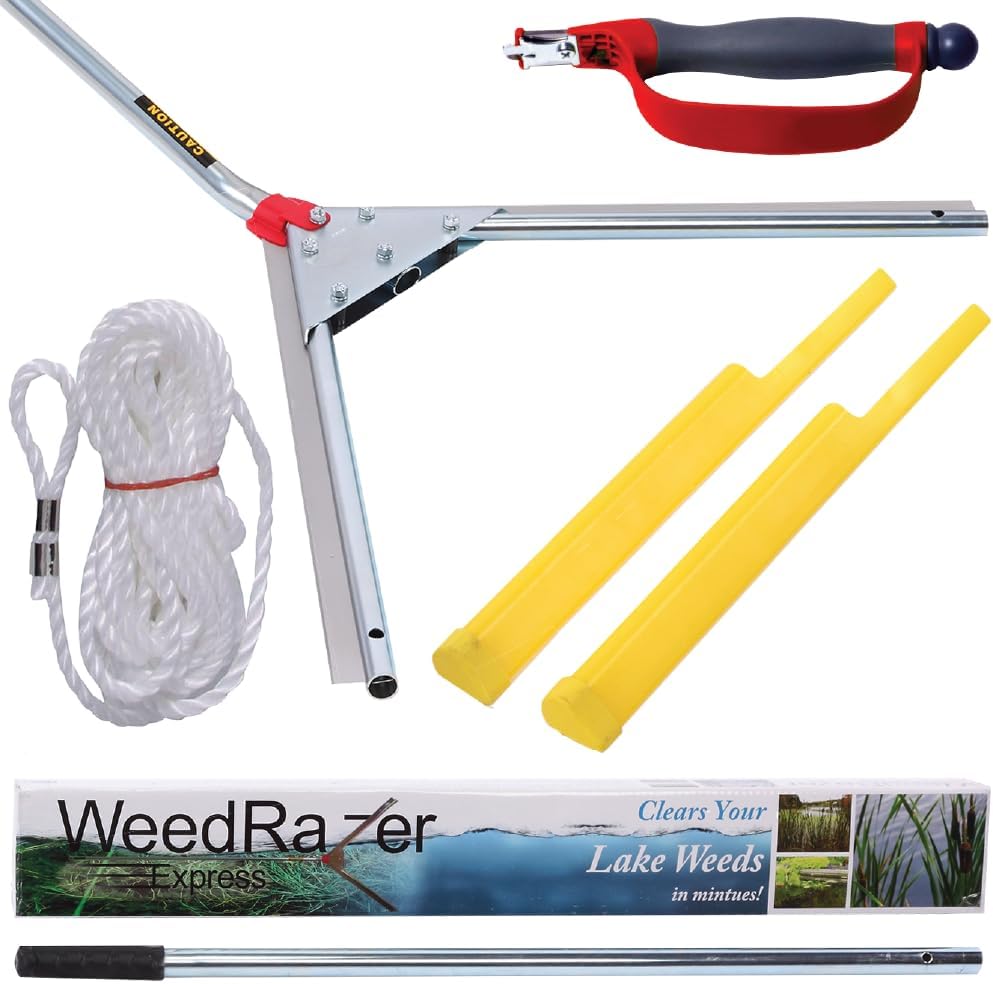
 Weed Razer
Before you cut, ask about the rules
August 5, 2026
Yes, there are rules
Aquatic plants sit in public water even when they grow in front of private frontage, and most states have a say in what comes out of it. Some states let a shore owner clear a swim area by hand without asking anyone. Others cap the width of the cleared strip. Some want paperwork filed before the first cut.
None of this is a reason not to cut. It is a reason to spend ten minutes on the phone first.
Who to actually call
Start with your state's natural resources or fish and wildlife department. Search the state name plus aquatic plant removal and the right page usually comes up first. Lake associations are the other good source, since someone there has already asked every question you have.
Ask three things: whether hand cutting needs anything filed, whether there is a width cap on a cleared area, and whether any plant in your lake is on a watch list.
Watch list plants change the picture
Some milfoil and hydrilla varieties spread from drifting fragments, and lakes fighting them often have specific rules about disturbing beds. Your state office will know if your lake is one of them, and this is exactly the situation where asking first matters most.
It is also one more argument for tight raking. Gathering every fragment you cut is good practice on any water, and on a watch list lake it is the whole game.
Keep it neighborly
Cut on a calm day so the drift stays put, and rake the same afternoon so nothing floats down the shoreline. If your cleared lane sits near a property line, a word with the neighbor beforehand costs nothing.
We put this note in the box with every cutter for a reason. The tools work. Where and how much to use them is a local question, and local questions have local answers.