 Weed Razer
Roots, muck, and the work under the weeds
July 8, 2026
What muck actually is
That soft black layer that swallows your ankles is decades of dead plants, leaves, and silt that never fully broke down. It is spongy, it smells when stirred, and it is exactly the seedbed rooted weeds love.
Muck builds slowly and quietly. Every season of weeds left to rot adds a little more. Which is also the case for pulling cuttings out: less rot, less muck.
Why cut weeds come back
A cutter shears the stalk, and the root crown under the mud never notices. In fertile water the crown pushes new stalks within weeks. A midsummer second cut is normal on most lakes, not a sign you did anything wrong.
If the same patch refills fast every time, the roots are telling you they are well fed and well established. At that point cutting alone is mowing, not clearing.
What a hand tool reaches
Here is the part most catalogs skip: nothing we build digs a root crown out of the sediment. A thrown blade shears above it, teeth drag across it, and a basket lifts what is already loose. The crown stays where it is.
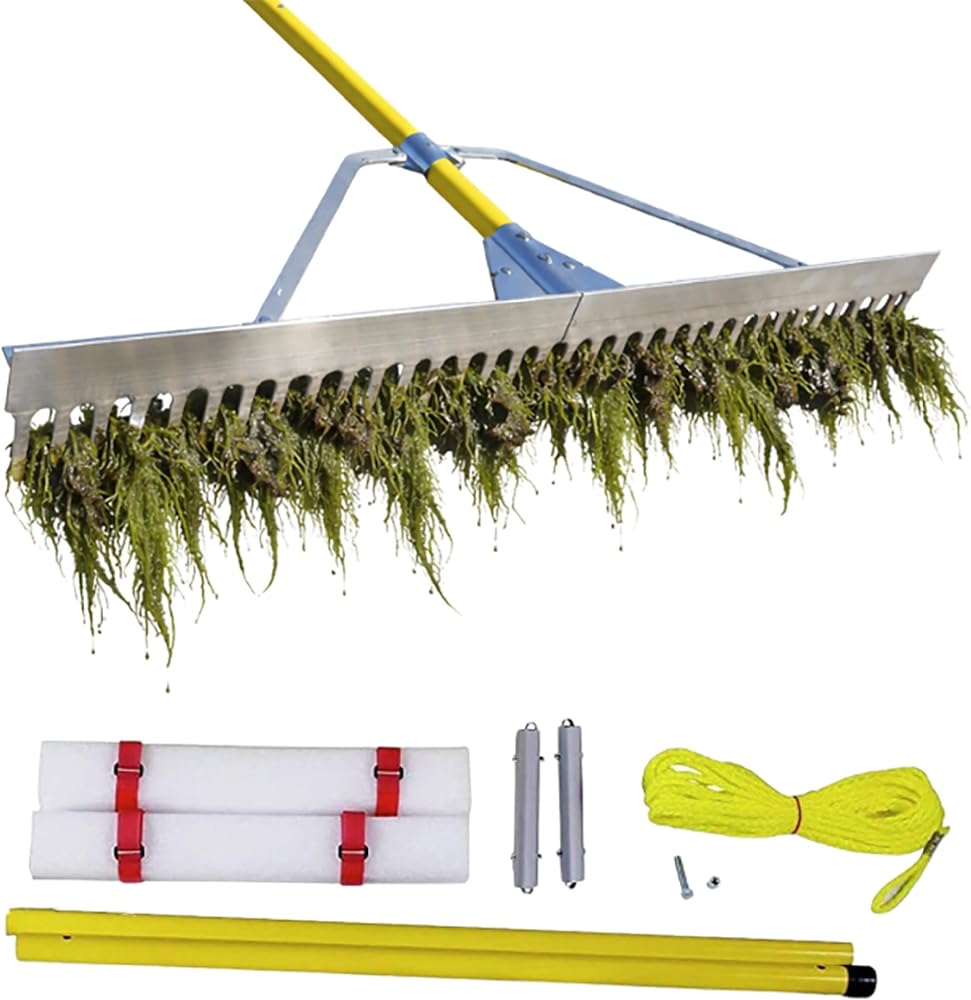
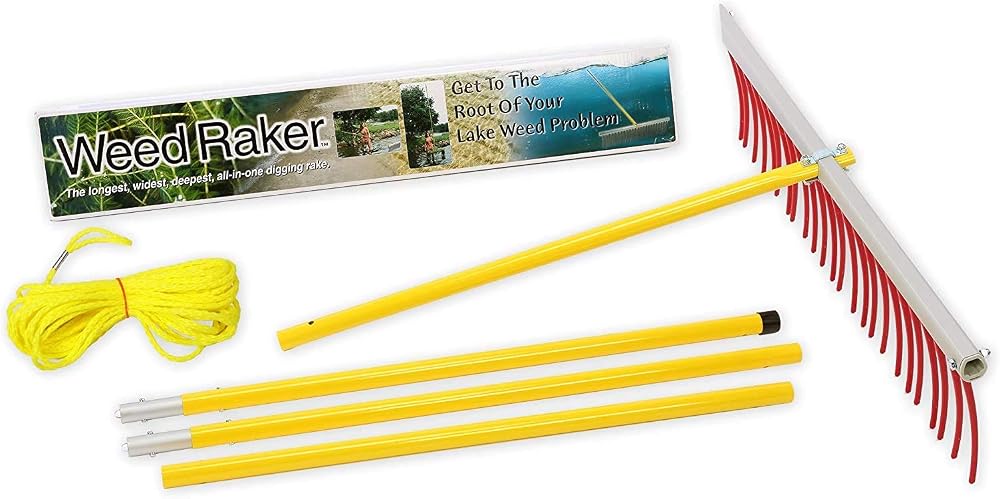
What you can reach is everything lying on top of that layer. The Weed Raker bites into the silt and drags rooted stalks and bottom debris ashore. The Swifter Sifter, floats pulled off, drops and scoops the deposits that already sank. Every basketful is organic matter leaving the water instead of rotting into the layer.
Seasons, not afternoons
The bottom works on a slower clock than the cutter does. One afternoon of lifting drift changes nothing you can see. Several seasons of taking the cuttings out, every cut, is how a bed gets thinner and a soft strip gets firmer.
So the honest plan is unglamorous: cut when the lane closes, gather the same day, skim what the wind returns, and repeat. The alternative, leaving it all in the water, is the thing that built the layer in the first place.