 Weed Razer
Cut, rake, skim: the order of the work
May 18, 2026
Why the order matters
People write to us asking which single tool clears a shoreline. The honest answer is that no single tool does. A weed bed is stalks in the water, roots in the mud, and whatever floats loose in between. Each of those is a different job.
The good news is the order never changes. You cut first, you gather second, and you skim whatever the wind brings back for as long as the season runs. What stays in the mud stays in the mud, and we say so rather than sell you a promise.
First the cut
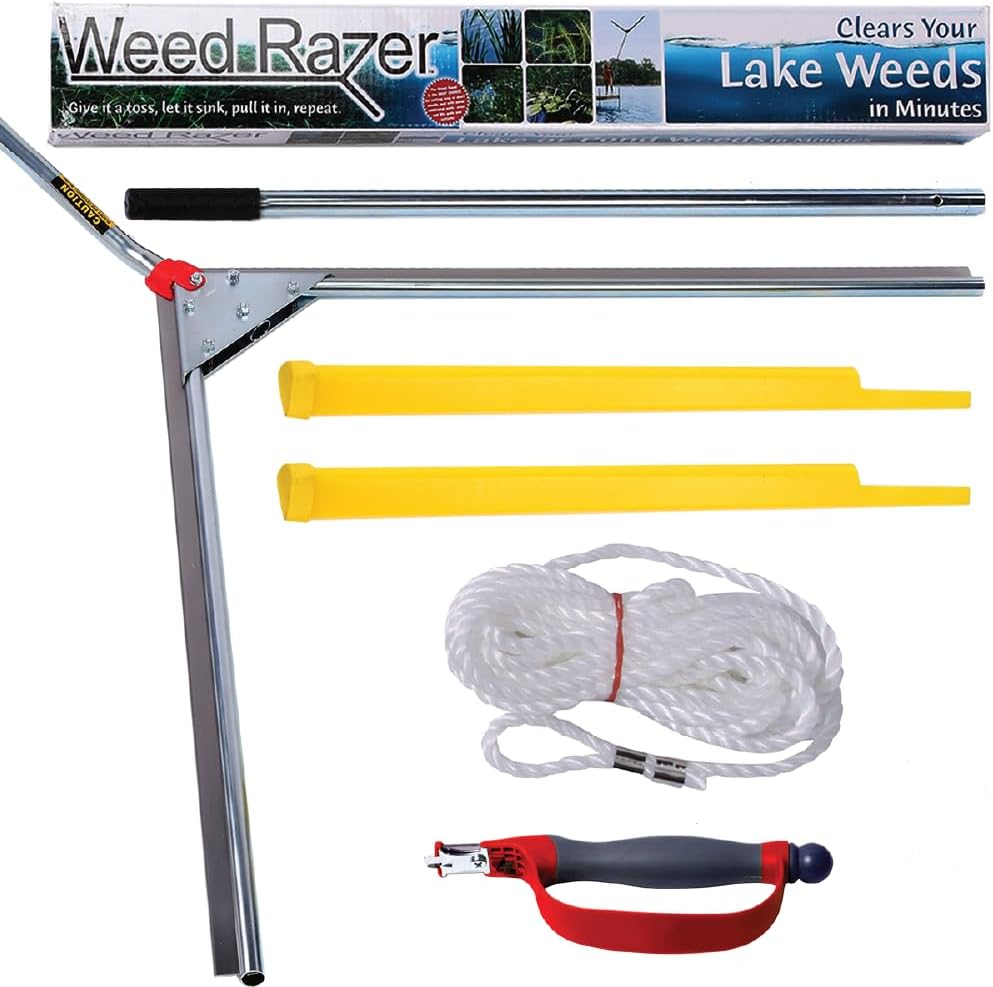
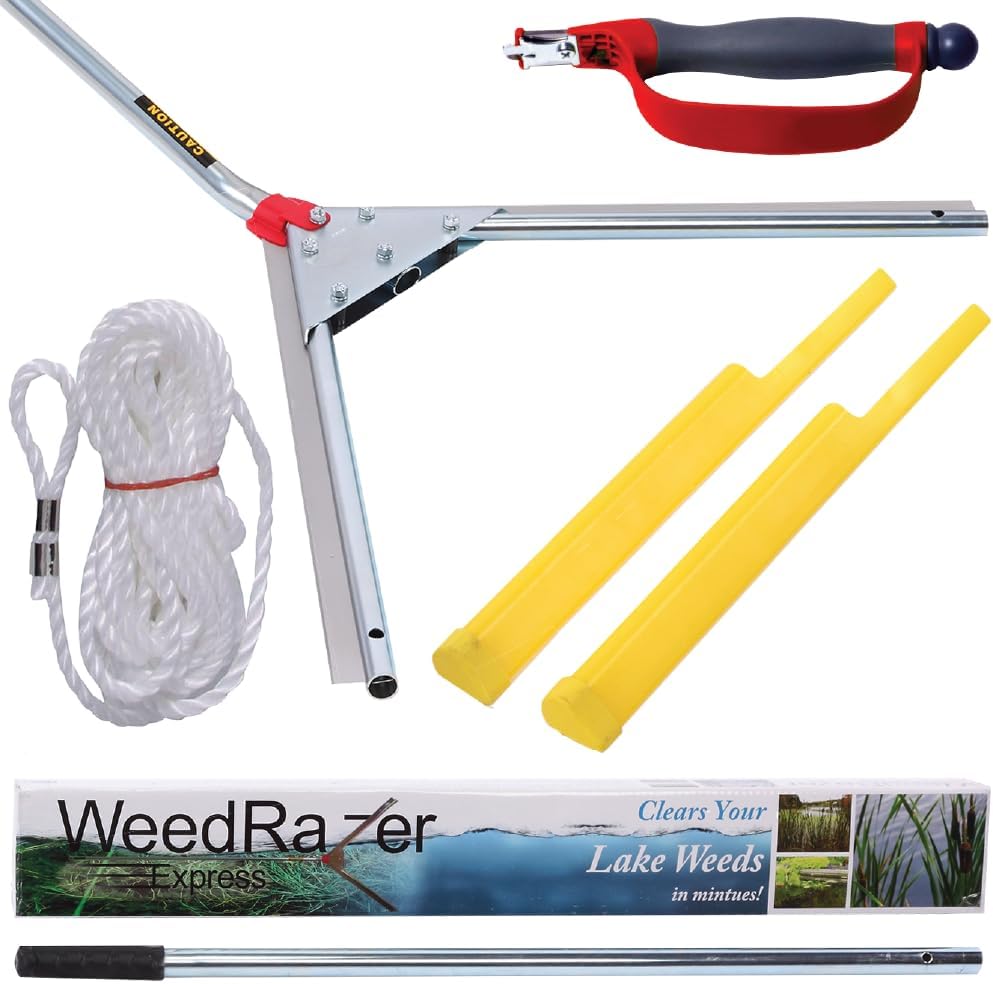
A V shaped cutter on a rope opens the water. You throw it past the weed bed, let it sink, and pull it back through the stalks. The blades shear milfoil, pondweed, and lily pad stems near the bottom.
Our standard head cuts a path about 48 inches wide per pull. The Express runs narrower for tight slips, and the Pro adjusts from 30 to 62 inches so you can match the spread to the water in front of you. The cut itself is the quick part. Twenty minutes of throwing opens a swimming lane.
Then the rake
Everything you cut floats. If you walk away at this point, the wind gathers your afternoon of work into a mat and parks it against the neighbor's dock, or yours. Within a week the stalks get waterlogged and sink back down to rot.
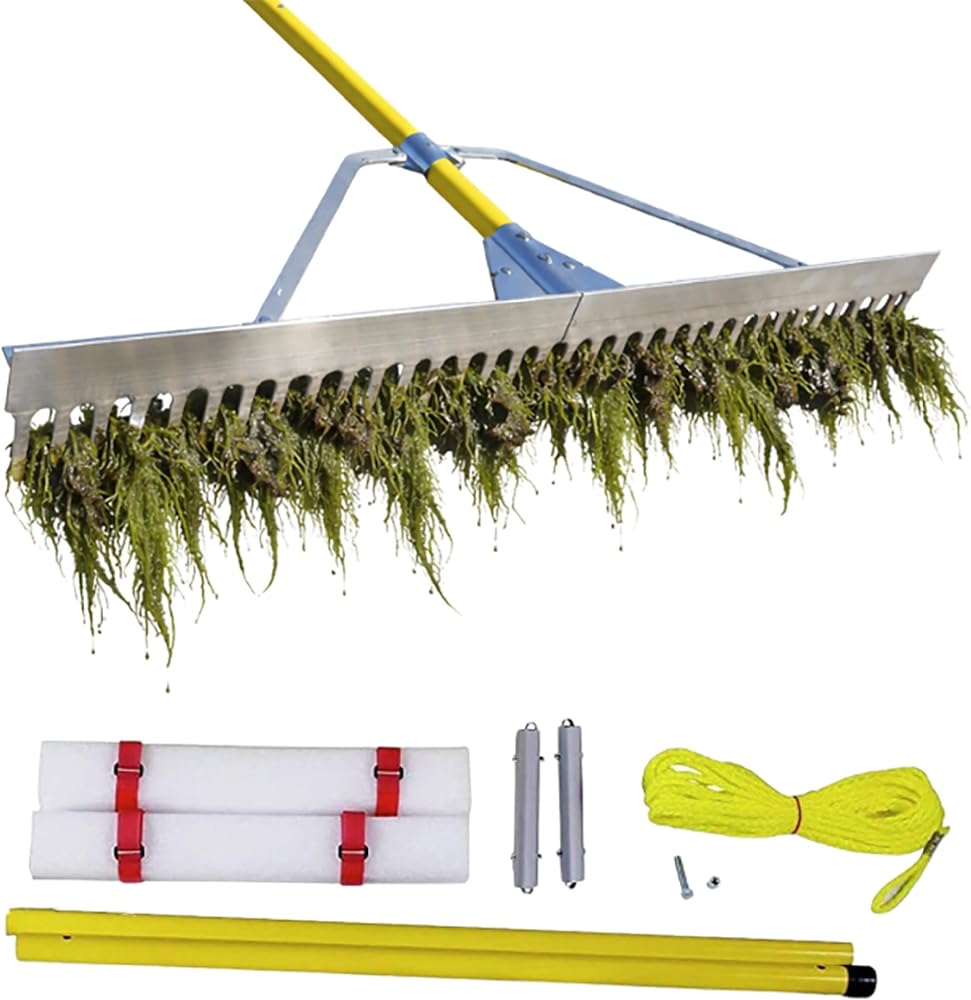
So the rake follows the cutter the same day. The Razer Rake rides on snap-on floats to corral the surface drift, and the Weed Raker throws deep on a rope to haul what already sank. Pile the wet stalks on the grass, let them dry, then move them well back from the waterline.
The second round
Cutting sets a bed back for weeks, sometimes the season. But the roots stay anchored in the sediment, and in fertile water the stalks return by midsummer. That is not a failed cut. That is what roots do.
No tool on these shelves reaches a root crown under the mud, and we will not pretend otherwise. What does slow a bed down is removing biomass: every stalk you haul ashore is nutrients leaving the water instead of settling back into the bottom. Cut again when the lane closes, and take the cuttings out both times.
Skim what comes back
Loose weed also arrives from elsewhere. A storm across the lake sends drift to your shore whether you cut anything or not. When that happens the Swifter Sifter is the tool: floats on, drag it across the top, and the basket comes up loaded with stalks, duckweed rafts, and wind blown scum.
Pull the floats off and the same basket sinks to scoop what already settled. Keep it near the dock through summer. Skimming a fresh mat takes ten minutes. Lifting one that soaked and sank takes a lot longer.