 Weed Razer
Name the weed before you pick the tool
June 2, 2026
The five minute dock test
Before any money changes hands, stand on your dock and look down. Better, drag a garden rake through the water once and look at what comes up on the tines. What is growing decides everything that follows.
You are sorting the growth into one of four piles: rooted stalks under the surface, stiff plants standing above it, leaves floating on top with stems running down, or loose green stuff with no stem at all.
Rooted and submerged
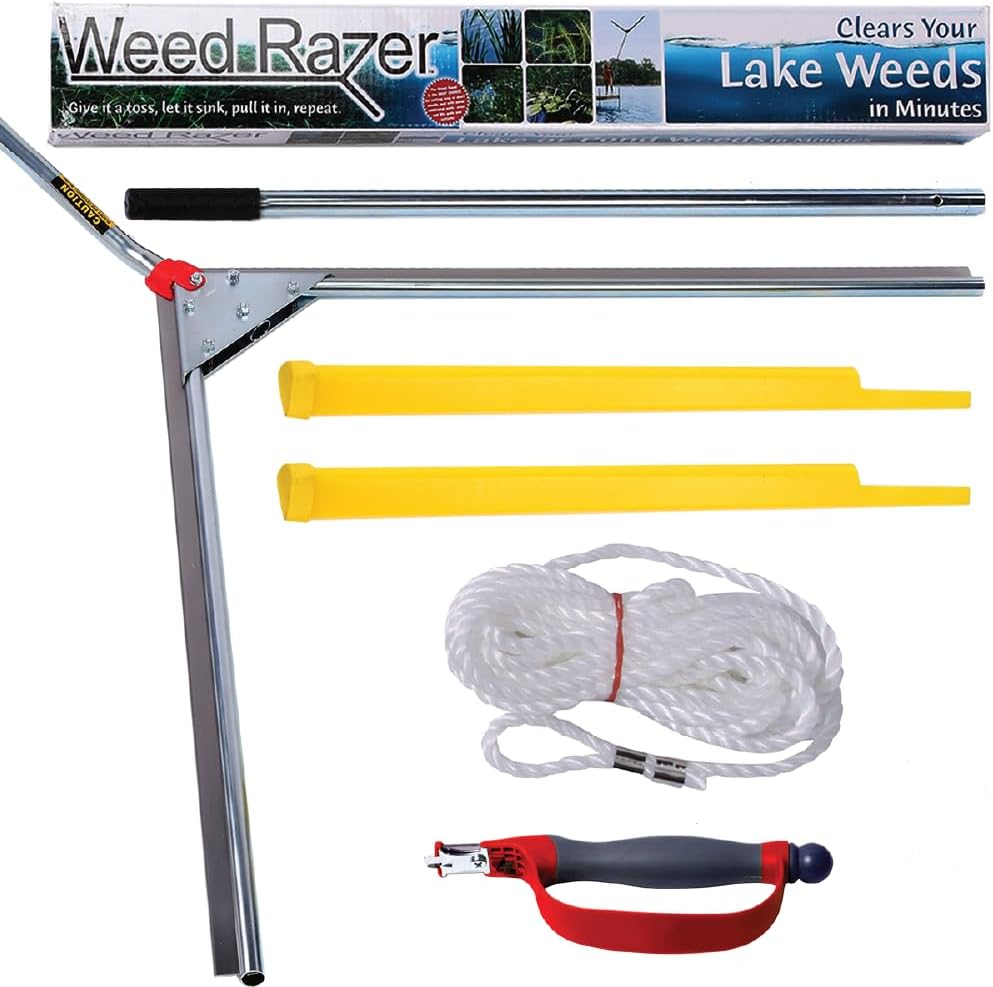
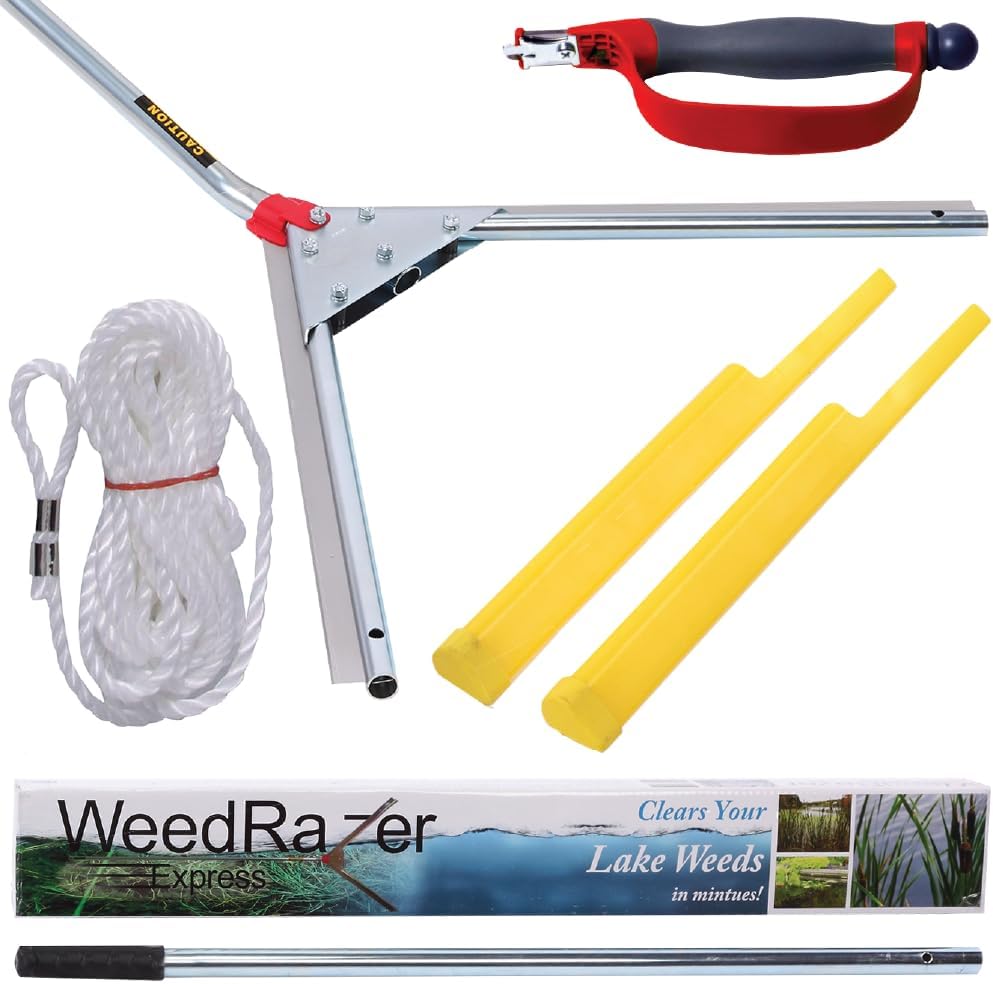
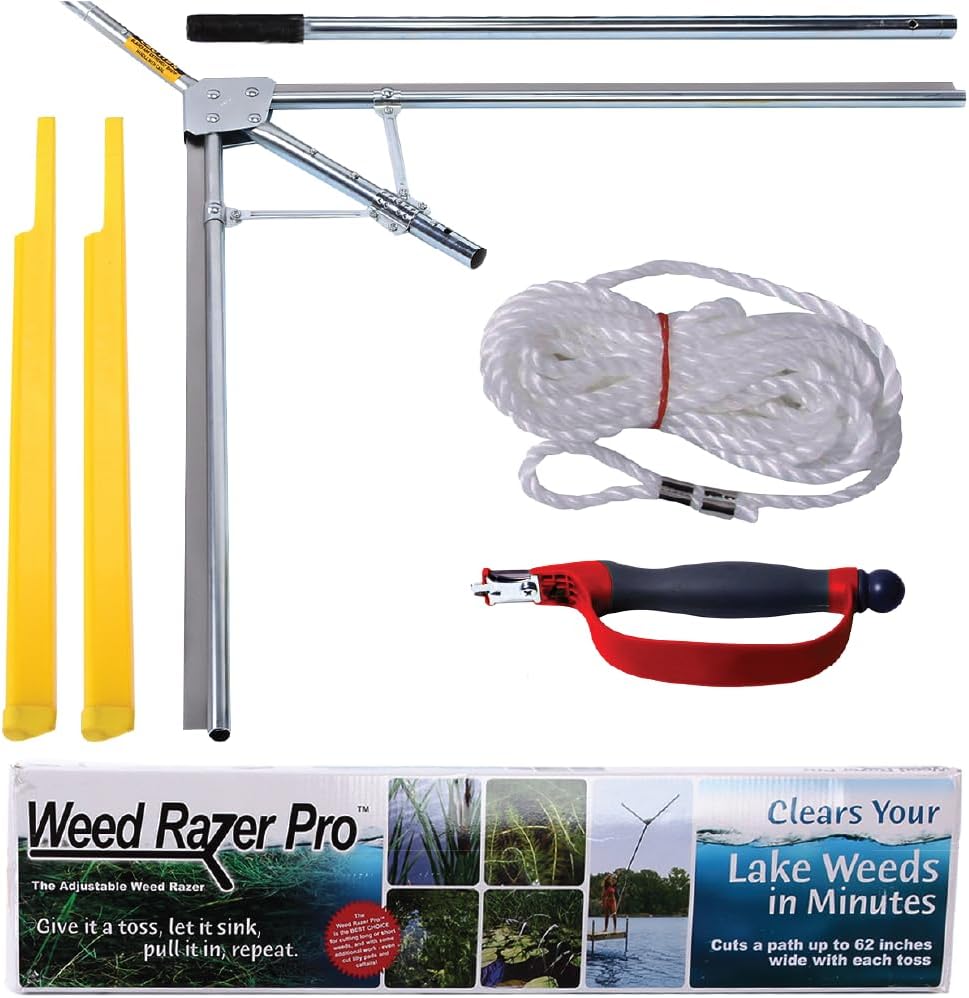
Milfoil, pondweed, and coontail grow up from the bottom in soft strands. Pull a piece and you get a long stem with feathery or ribbon leaves. This is what our V cutters were built for. The blades ride near the sediment and shear the stalks low, and the cut lane stays open for weeks.
Milfoil deserves extra care. Fragments of some milfoil varieties can drift off and root elsewhere, which is one more reason the rake follows the cutter the same afternoon. Gather everything you cut.
Standing above the water
Cattails, reeds, and bulrushes hold a stiff stalk into the air. They usually crowd the shallows right at the shoreline. A cutter handles them, though the pull is heavier than through soft milfoil, and thick stands take repeat passes.
These plants also hold banks together and shelter ducks and fish. Most shore owners cut a lane through them rather than clearing the whole stand, and that is usually the right call.
Floating leaves on long stems
Lily pads look like a surface problem, but the plant is a stem running down to a thick root in the mud. The cutter shears those stems well below the surface. The pads float off, the rake gathers them, and the lane opens.
The roots stay, and lilies regrow from them season after season. Where a lily bed keeps filling back in, plan on a second cut and on lifting every pad out of the water, because what rots in place is next season's fertiliser.
No stem to cut
Duckweed is thousands of separate floating specks, each smaller than a fingernail. Algae is green threads, mats, or clouded water. Neither has a stalk, so a blade passes through and changes nothing.
A rake riding on floats can drag a filamentous algae mat or a duckweed raft to shore, and that is honest work it does well. Green cloudy water is a nutrient question, not a tool question, and we would rather say so than sell you steel for it.