 Weed Razer
Why we build steel instead of treatments
July 28, 2026
What we make and what we do not
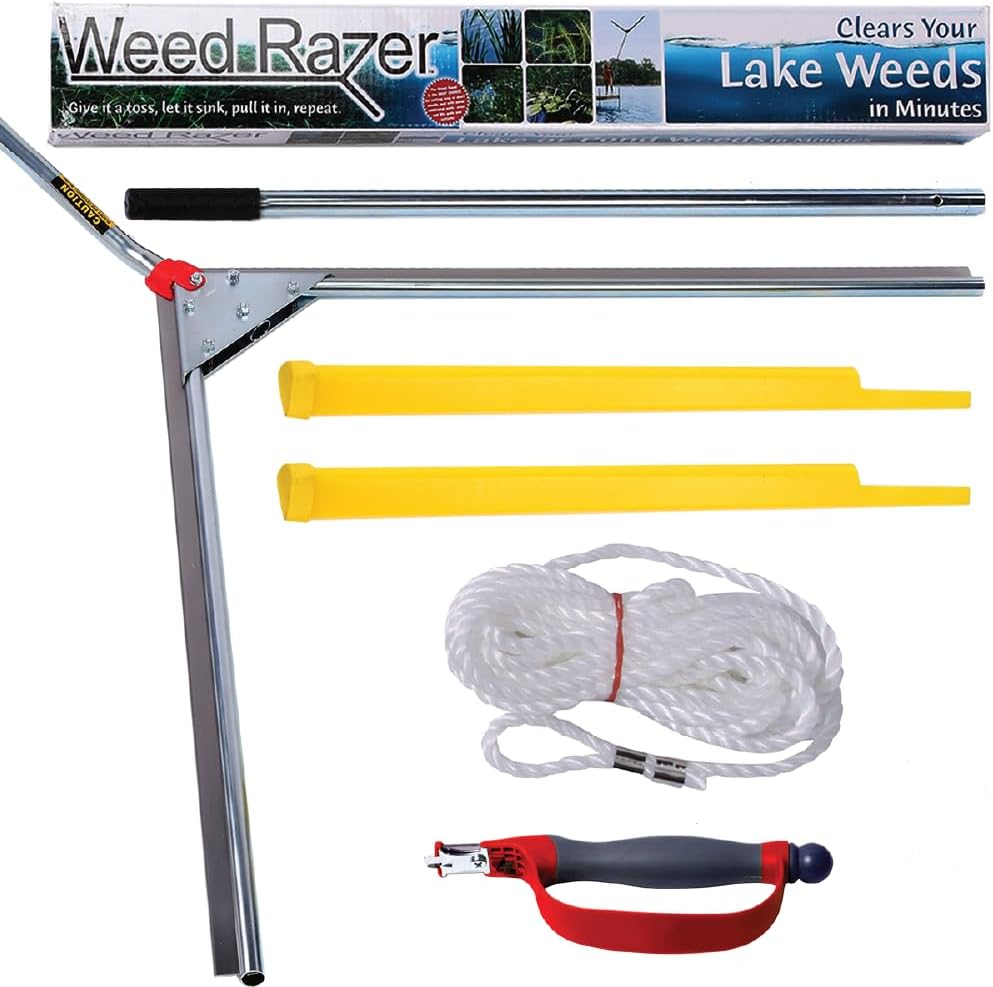
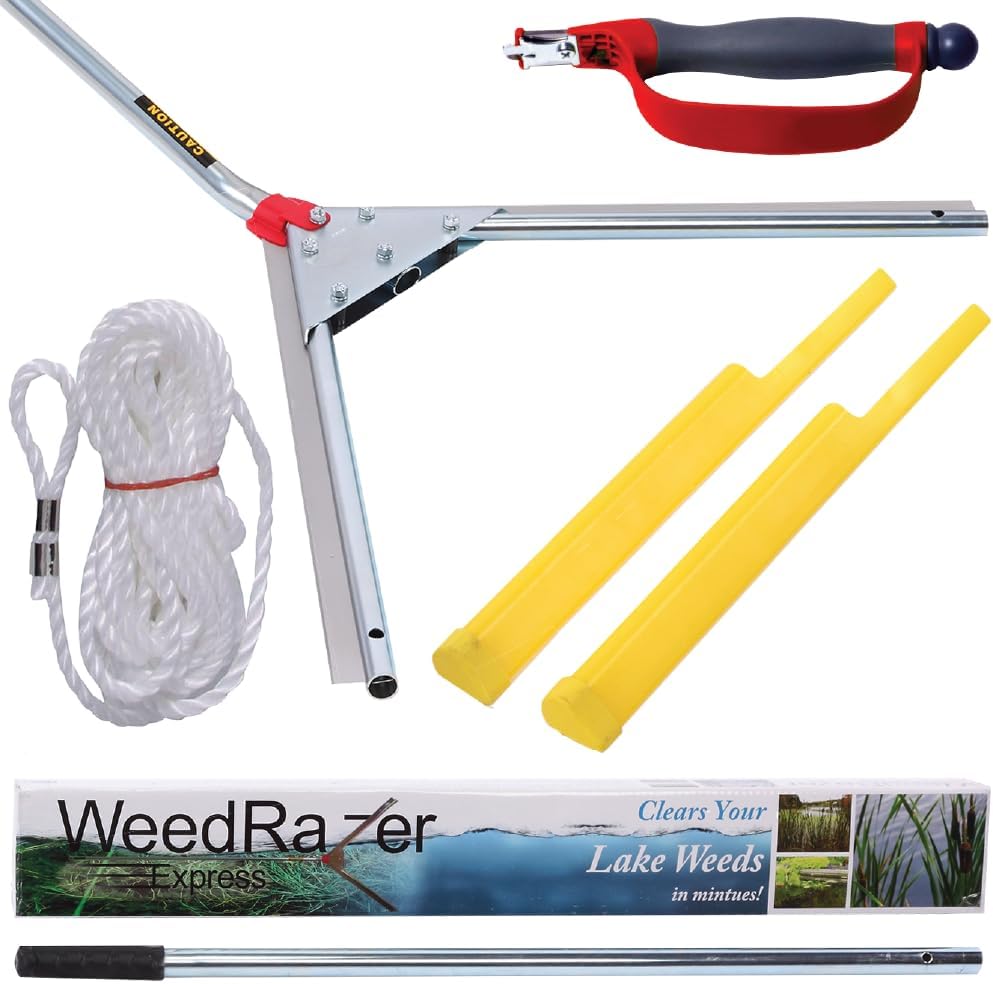
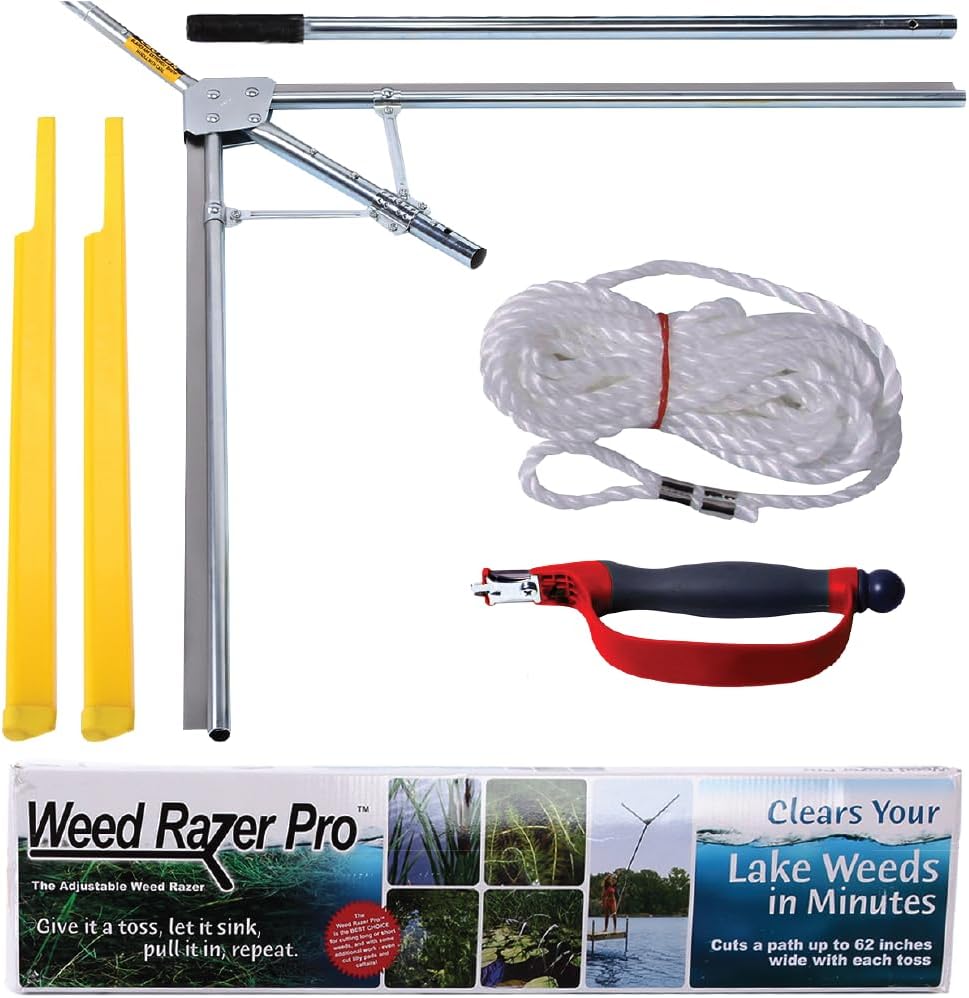
Everything in our catalog is mechanical: a blade you throw, a rake you drag, a basket you skim with. Nothing goes into the water except steel and aluminum, and everything they touch comes out on a rope.
Water treatments are a different trade with its own products, its own timing, and its own paperwork that varies by state. Some shore owners use them, some lakes restrict them, and we are not the people to advise on any of that. We build tools.
The cut works the day you make it
Throw the cutter in the morning and you swim in the lane that afternoon. There is no waiting period, no re-application schedule, and no wondering whether it took. You can see the result from the dock, in hours.
The cost side is just as plain. A cutter is bought once and thrown for years. The only recurring inputs are your arms and a few strokes of the sharpener.
You choose what goes
A thrown blade cuts exactly the lane you pull it through. The cattail stand that shelters the ducks stays. The milfoil in front of the swim ladder goes. That kind of precision is the whole point of a tool on a rope.
Plants are also the lake's furniture. Fish hold in weed beds, and a fully bare bottom is not what most shore owners actually want. Cutting lanes and pockets keeps the structure while opening the water you use.
The honest downside
Hand work is work. A full afternoon of throwing and hauling is a workout, the wet piles are heavy, and the roots send stalks back up until you deal with the bottom. Anyone telling you a shoreline stays clear after one pass of anything is selling something.
What you get in exchange is a result you control completely, on your schedule, at a cost you know upfront. On a frontage measured in feet rather than acres, that trade wins for most people.