 Weed Razer
Duckweed and algae: what a blade cannot do
July 16, 2026
A blade needs a stalk
Every cutter we build works the same way: steel meets stem, stem shears, plant floats up. Take away the stem and the tool has nothing to do. It will pass through a duckweed raft like a spoon through soup.
We get letters about this every summer, usually from someone about to order the wrong tool. So here it is in plain words before you spend anything.
Duckweed
Duckweed is a raft of thousands of separate tiny plants, each a speck with a dangling root thread. It arrives on a duck's feathers, thrives on nutrient rich water, and doubles fast in warm weather.
A rake with floats on can push and drag duckweed to shore, and on small ponds people do make headway that way. But the plant regrows from whatever specks remain, so raking duckweed is upkeep, not removal. The lasting fix is cutting off the nutrients that feed it, which is a shoreline and runoff question.
Filamentous algae
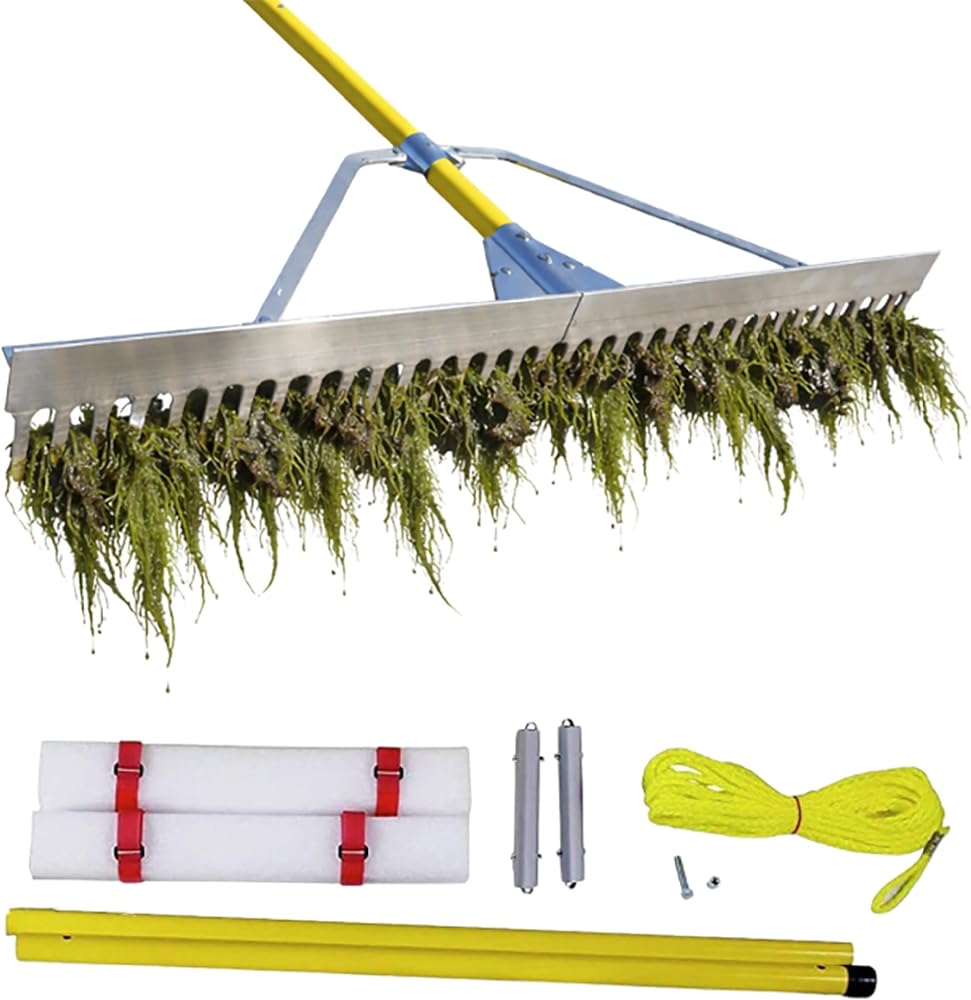
The green cottony mats that rise off the bottom in early summer are filamentous algae. No stem, no root, no structure a blade can meet. A floating rake handles the mats honestly: throw past, drag home, fork the mess onto the bank.
Expect it to return while the water stays warm and fed. Raking mats is a chore like mowing, done every few weeks through the peak of summer.
Green water
Water that looks like pea soup is planktonic algae, single cells suspended through the whole water column. There is nothing to cut and nothing to rake. We do not sell an answer for it, and we would rather say that than ship you a tool that will not help.
Green water is a nutrient load question. County extension offices and lake associations deal with it constantly and are the right first call.